

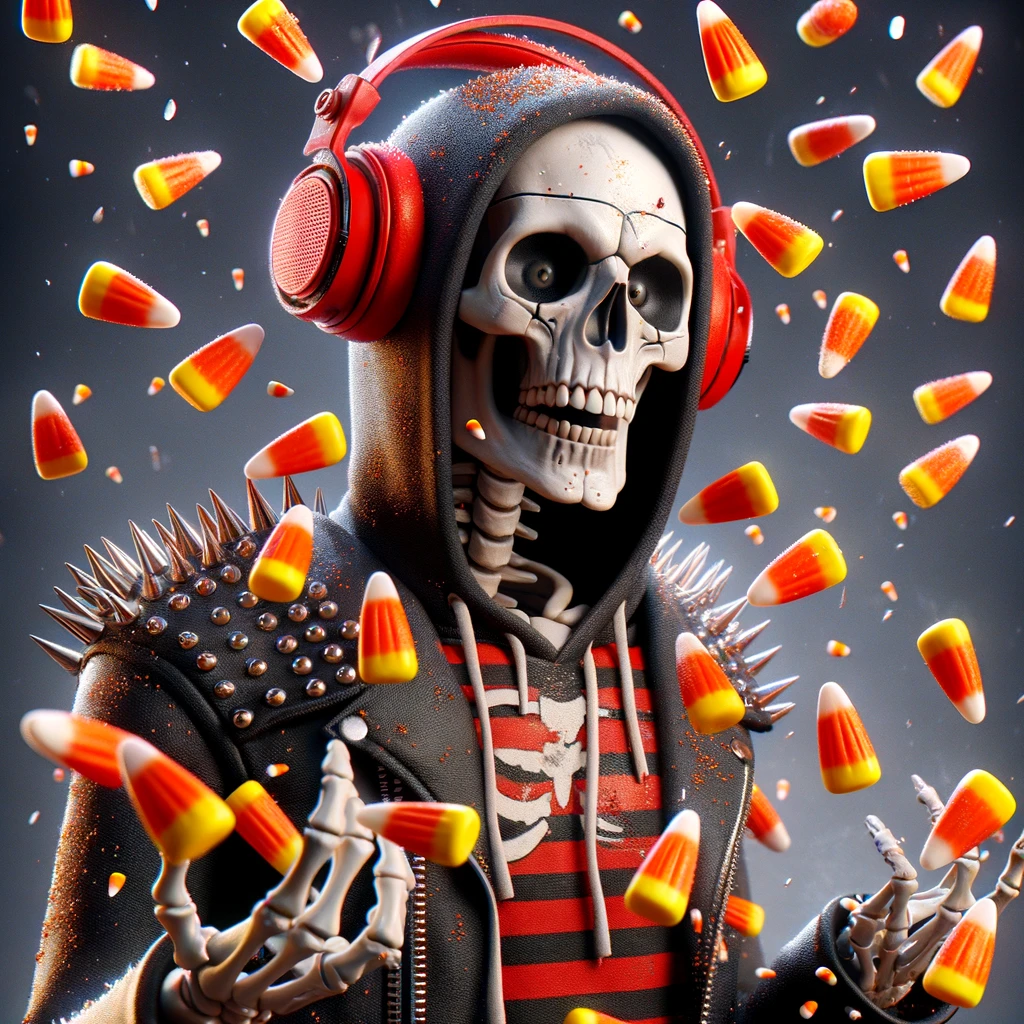
Ah, candy corn—the quintessential symbol of Halloween and the sugary fuel of my skeletal existence! As Skeleton Sam, nothing gets me more excited for the spookiest night of the year than seeing those familiar orange, yellow, and white kernels spilling out of trick-or-treat bags. Every October, I eagerly await the chance to don my favorite costume and join the little ghouls and goblins roaming the streets, all while secretly hoping for an extra handful of candy corn in my stash.
There’s something magical about how these tiny, waxy triangles can capture the essence of Halloween in every bite. It’s the taste of haunted houses, eerie moonlit nights, and the thrill of trick-or-treating, all rolled into one delightful treat. Sure, some might turn their noses up at it, but to me, candy corn is the edible embodiment of Halloween spirit. So, as the leaves turn and the air grows crisp, I tip my skeletal spiked hoodie to candy corn—the snack that turns every Halloween (or Halfoween!) costume party into a sweet celebration and every trick-or-treat outing into a nostalgic journey back to the heart of Halloween.
How Candy Corn Became a Halloween Candy
Candy corn wasn’t always a Halloween thing. For its first few decades it was a year-round “penny candy,” cheap enough for kids to buy by the scoop at the general store, and it was marketed with a farm theme as “Chicken Feed.”
Trick-or-Treating Changes Everything
Trick-or-treating spread across America in the 1930s and 1940s, paused during World War II sugar rationing, and took off in the late 1940s and 1950s. Early treats were things like homemade cookies, fruit, nuts, coins and small toys, not candy.
In the 1950s, candy makers saw their chance. They began promoting their products for Halloween, and small, inexpensive treats like bags of candy corn became an easy choice for handing out at the door. Candy historian Samira Kawash has noted that October advertising for candy corn jumped sharply starting in the 1950s.
Why It Stuck
- The colors: orange, yellow and white match the fall harvest perfectly.
- The price: it was cheap to make and easy to share by the handful.
- The tradition: generations of trick-or-treaters grew up with it, so it tastes like Halloween.
Today the National Confectioners Association even marks October 30 as National Candy Corn Day, the day before Halloween. Want the full backstory? Read The Sweet History of Candy Corn.
So when I see candy corn spilling out of a trick-or-treat bag, I’m not just seeing candy. I’m seeing more than 70 years of Halloween tradition.


Leave a Reply